Alberta Tar Sands Environmental Impact: Climate Change and Pollution
The tar sands in Alberta is by far Canada's worst environmental disaster and one of the worst in the world along with the
- Great Pacific Garbage Patch
- Holes in the ozone layer
- Gulf of Mexico Oil Spill
- and the Destruction of the Amazon Rainforest.
It is also one of the biggest industrial, capital investment and energy projects worldwide.
Many of the biggest multinational oil corporations have invested a total of 120 billion dollars.
Sadly, few realize the truth about the oil sands of Alberta which is home to the most energy-intensive and dirtiest industrial enterprise on Earth.
Incredible Size
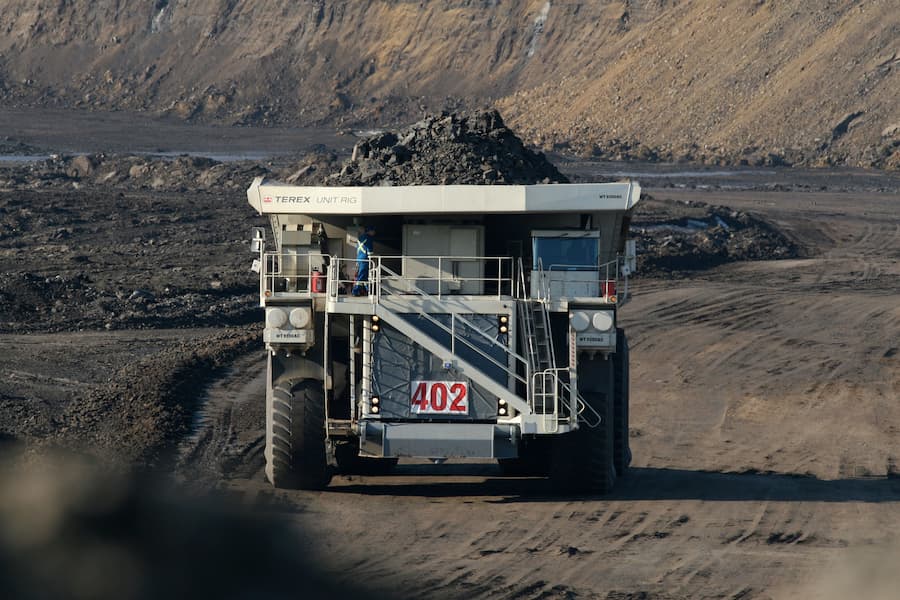
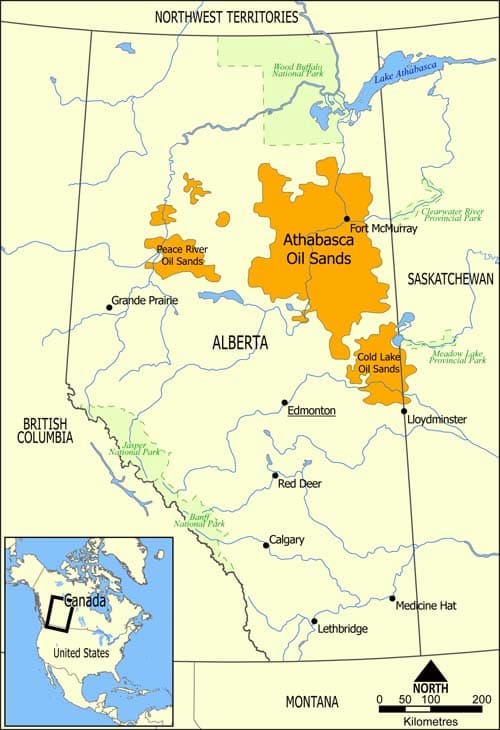
To begin, the total area consists of 140,200 square kilometers (54,132 square miles) which is larger than England.
In fact, Canada’s total oil reserves are the second largest in the world, behind Saudi Arabia, something that many Canadians are unaware of.
Greenhouse Emissions
The tar sands generate an unbelievable 36 million tonnes of carbon dioxide per day, about as much a 1.3 million cars.
As a result, Canada's greenhouse gas emissions have grown more since 1990 than those of any other G8 nation. While over 100 countries worldwide made progress, Canada was left behind.
As a matter of fact, the tar sands are one of the main contributors to Canada's decision of withdrawing from the Kyoto Protocol.
The Inconvenient Truth of Bitumen
The oil that is extracted is one of the world's most carbon-intensive fuels as two tonnes of tar sand is required to produce only a single barrel of oil.
In addition, the oil itself is bitumen (extremely heavy crude oil) which contains cancer-causing polycyclic aromatic hydrocarbons.
It is without doubt one of the dirtiest and most contaminated processes of oil development ever known in history.
Environmental Destruction
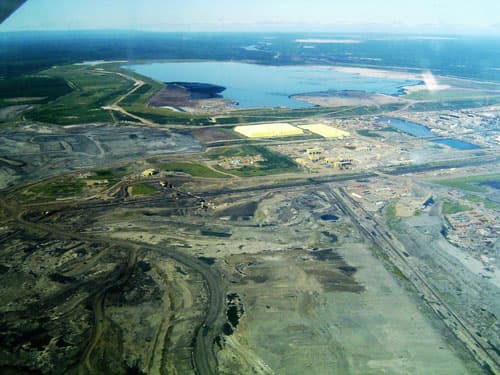
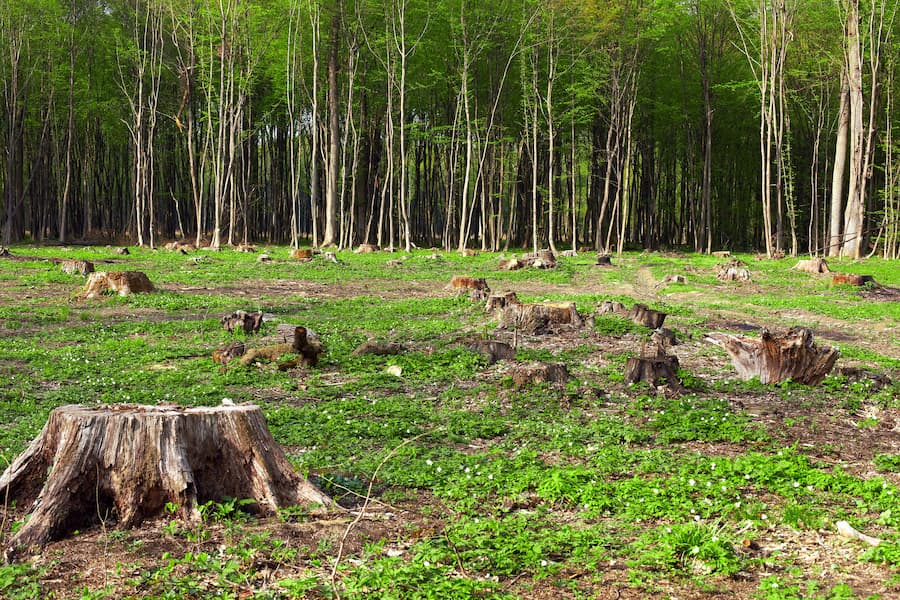
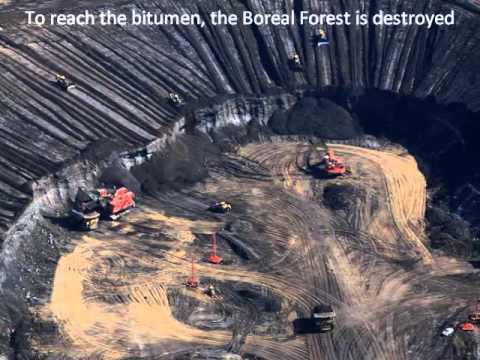
In order to reach the bitumen, the Boreal Forest is destroyed due to large-scale surface mining. The industry itself admits that the damage is permanent and cannot be undone.
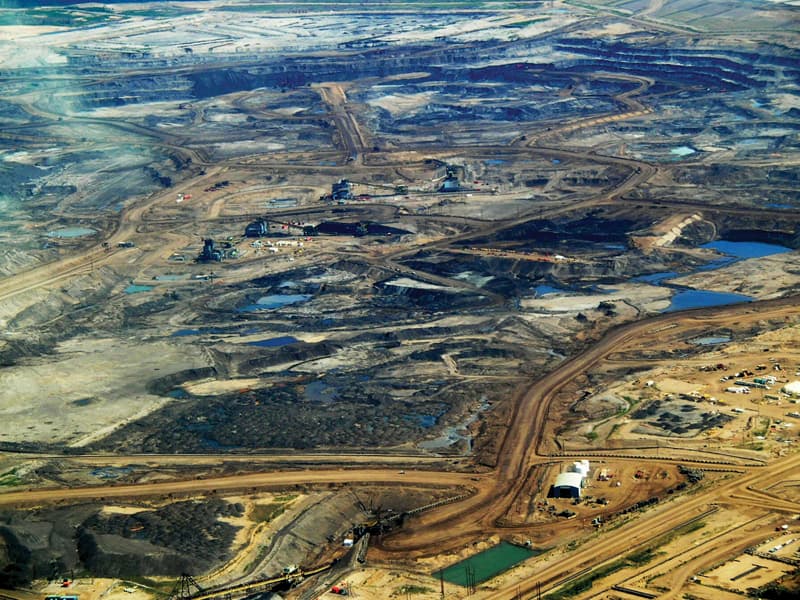
Destroying forests, generating huge amounts of carbon dioxide and creating extensive open mines is but the tip of the iceberg.
In fact, important waterways like the Athabasca River are being contaminated by 11 million liters of toxic waste every day.
Also, the air is polluted with dangerous toxins, poisoning communities (including natives) with rare cancers and autoimmune diseases.
Their drinking water itself is strongly contaminated and no action is done to help them. Many have left their homes already.
Additionally, critical animal habitats and some of Canada's most pristine landscapes are being destroyed on a daily basis.
Consumption of Resources
It even consumes massive amounts of water, more than an entire city of two million people.
To produce its oil, in 2007 alone it used about 1 billion cubic feet of natural gas per day, an incredible amount. To make matters worse, this gas was often obtained by fracking.
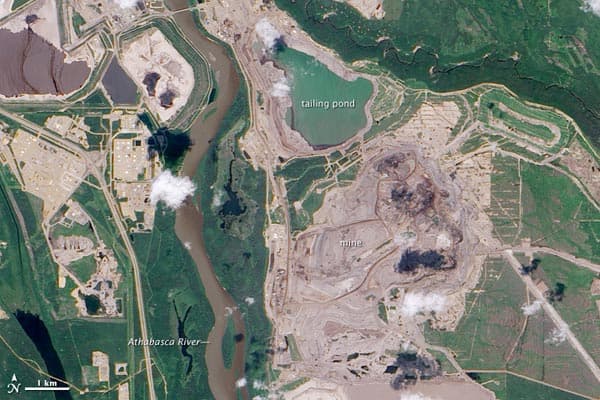
Waste water is stored in toxic ponds so large that one can see them from outer space.
These toxic lakes leak 11 million liters of toxic water daily into ground water and nearby rivers which is used as drinking water for local communities.
Role of the Canadian Government
Unfortunately, the Alberta government has approved every proposed project so far.
It should also be noted that the former Canadian Prime Minister Steven Harper is from Calgary, Alberta and his father, Joseph Harris Harper, worked for Imperial Oil.
Moreover, Harper provided major corporate tax cuts which primarily helped large oil corporations.
In other words, he gave billions of dollars to the corporations which are poisoning communities, but is not helping the people affected by this horrible tragedy.
Harper even called the oil sands an epic undertaking similar to building the pyramids in Egypt or the Great Wall of China. Clearly, he is giving the worst environmental catastrophe in Canada his full support.
In addition, he stated in 2002 that the Kyoto Protocol was a “socialist scheme."
In order to have a sustainable future, we need a leader who will bring us forward and not backward into dirty oil.
Take Action on the Tar Sands
I made a YouTube video titled “Tar Sands in Alberta” years ago, which I highly recommend watching. Created in 2010, this video delves into the devastating environmental impact of tar sands extraction and the powerful oil corporations behind it. Unfortunately, these corporations wield significant influence over the media, resulting in limited public awareness of this critical issue.
To halt this environmental catastrophe, it is essential to raise awareness and educate others about the realities of tar sands extraction. Please share this website and the video with your friends and family to help spread the word. By collectively amplifying this message, we can push for more informed discussions and actions to protect our planet.
Taking action on climate change goes beyond raising awareness—it requires concrete steps and collective efforts. Support renewable energy initiatives, advocate for stronger environmental policies, reduce your carbon footprint by making sustainable lifestyle choices, and encourage others to do the same. By engaging in community actions, supporting green technologies, and holding corporations and governments accountable, we can drive significant changes that safeguard our environment for future generations. Together, we can create a more sustainable and resilient world. Thank you for your support.

Laurent Cousineau is the founder of Climate Change Guide. He is a writer, actor, and environmentalist. He is from Montreal, Canada. He started the website and Facebook Page Climate Change Guide in 2011.
Join the Community and Newsletter (4500 Subscribers)
You can subscribe to my Substack Page or see the archives of previous posts. More great content coming soon!
Recent Articles


-
Meat Industry Environmental Impact: Causes & Solutions
Oct 22, 26 11:47 PM
 Explore the meat industry environmental impact, from greenhouse gas emissions and deforestation to water use and pollution. Discover sustainable solutions.
-
The G Word Documentary: Netflix Series Review & Summary
Oct 22, 26 10:56 PM
 Explore The G Word documentary on Netflix with Adam Conover. Discover how the series examines government, its successes and failures, and climate change.
-
The Corporation Documentary Summary on Climate Change
Oct 22, 26 10:47 PM
 Get a clear The Corporation documentary summary, with key ideas on corporate power, environmental harm, externalities, ethics, and climate change.
-
Bill Gates Nuclear Power Documentary on Climate Change
Oct 22, 26 10:11 PM
Get a clear look at the Bill Gates nuclear power documentary, with TerraPower, reactor safety, climate change, and the case for low-carbon energy.


